The first, I lost to Christ - or so it would seem.
To what or whom I lost the second, I am still not entirely sure.
Various theories had been proposed, covering psychopharmacology, spirit influences, even numerology - and the possibility, of course, that I was just notably in the wrong.
And while I didn’t know exactly what had happened for them, I had a better sense of what had been happening with me.
I had painted them with projection. In an internal world colored by an obsessive-compulsive disorder, an illness that I’ve lived with around half of my life, I had found getting my own spiritual guidance not dripping in doubt much more difficult, and thus leaned on them - this beloved teacher of shamanism - as a beacon of trustworthy intelligence. They had done the work to gain their knowledge; they knew the fact from the fiction; they could see the patterns that were worth, in turn, my seeing. I had an idea of the “truth” that I was projecting upon them when I was projecting it, shoving aside the fact that they were a fallible human, too. My condition had a manifest impact on our relationship. I wanted a rock of truth to hold onto in my turbulent psychological sea. And I metamorphosed them into one.
Since my expedition into the world of spirit began in 2014, I have sat and served in various roles with a number of teachers of different spiritual disciplines - some local, others of international celebrity. I’ve interfaced with even more practitioners, students, and clients. And all of them, I can say, share a common thread with me: they are human. Despite a perhaps-popular belief, even for how brilliantly-generous and open-hearted so many who walk a spiritual path are, “spiritual” persons are not by virtue more evolved than anybody else. I have confronted other them over their tongue-lashings of students and colleagues, seemingly to no avail; watched others fawn over their integrity, perhaps without really knowing them; seen how they appeared attached to being placed above the heads of others, or threatened by the idea of competition even if I’d heard their previous admonishments of the very idea of such in sacred work; received reports and witnessed claims of male instructors in the West having their (likely mostly-female) groups stripping naked for ceremony, sleeping with or sexually assaulting seminar and workshop participants; and beyond. And of course, there are more culturally-recognizable examples of controversy or poor judgement involving Buddhist and yoga teachers, gurus and priests, and others in the religious, spiritual, or self-help spaces, including emails to convicted sex offender Jeffrey Epstein from physician and author Deepak Chopra (who has denied involvement in any exploitative conduct), who referenced Epstein’s “girls” - such as on a trip to Israel where Chopra suggested Epstein could use a “fake name,” if he wanted - and quipped in 2017 two lines that sit with me: “Cute girls are aware when they make noises” and “God is a construct / Cute girls are real.”
The highly-uncomfortable reality is that, in addition to questionable and inexcusable conduct, such practitioners and teachers of spiritual traditions have sown, and still do, an amount of good that is likely impossible to measure using ordinary means. In this piece, I aim to evidentially deconstruct the notion that shamans (like other spirit workers) have been perfect and harmless healers from the beginning; to examine important context that can be present within reports of “poor behavior” from shamans, medicine persons, and even the spirits themselves; to explore the diminishing and curative power of projection; and to illuminate several techniques that one can potentially use to work with the ego in, and the darkness that has sometimes been found within, shamanic practice.
Violating Hippocrates
“Churches were never made for perfect people”, observed the late Baptist minister and Muscogee medicine man Marcellus “Bear Heart” Williams.
In the contemporary United States, such a fact seems clear to many, with the church-going sometimes being viewed (and rightly so) as hateful and divisive individuals willing to use their personal beliefs to limit the freedoms of others. As even a young college friend of my brother’s observed as he cast his fishing line into a boat lock before me, “There’s no hate like Christian love.”
And yet, such “hateful” persons may genuinely believe that their “hateful” efforts are directed towards the good - even the soul salvation - of their fellow man. The father of a friend of mine in Indiana, where I lived for two years, wrote his doctoral thesis on religious conservatism in the area. This brought him in contact with Christian ideologues who advanced gay conversion therapy efforts and restrictive policies against queer persons. Quizzed by her father about such efforts, the ideologues replied, “No, we’re not doing this because we hate them; we’re doing this because we love them!” They viewed the souls of their queer neighbors as being in jeopardy, either here or in the afterlife, and in what they viewed as an act of love, attempted to turn them onto a “straighter” (in more ways than one) path.
Major faiths like Christianity have thus gained a reputation for hateful conduct. Their cousins - “spiritual” paths, such as shamanism, psychic mediumship, and a vast swath of practices - may be viewed (again, understandably so) as housing more accepting, loving persons; people who, if not always racially diverse, are “better people,” progressive, healed of illness (they are healers, after all, so why would illness stick with them?), and more tuned in to their own shadows perhaps to the point of being free from them entirely. Being in touch with a higher power, they are sources of incontrovertible divine truth, and worthy of praise for their “specialness.” If the spiritual individual in question is Indigenous, they may also be subject to the somewhat-racist belief that Indigenous spiritual traditions are “pure” and free from practices that would aim to cause harm to others. While I can say that I would feel more immediately comfortable revealing certain details of my personal life - such as the fact that I, a man, have a husband, or that I practice a psychic tradition known as shamanism - to a Reiki practitioner than a Roman Catholic leaving Mass, it cannot be denied that the Reiki practitioner, like psychic mediums, shamans, and other “spirit workers,” is not automatically queer-friendly, unity-minded, aware of their own issues and biases, nor even a “good person.”
Indeed, it has been found that shamans (for a brief introduction to shamanism, as well as to the problem of defining exactly what shamanism is, see my piece The Shamans with White Skin: Cultural Appropriation, Confusion, & the Very Essence of Shamanism) do not always embody the “love and light” ethos that we in the West may assume would be their mantle - including in what many may consider “Hippocratic” matters of “do no harm.” A handful of examples should serve to illustrate this point.
Síre gús, described as “divining/miraculous women or witches” and “shamans” that have connections with the “bad spirits,” reportedly “can use sorcery to awaken love or cause bad luck or loss of health or mind.” In her study of the Mundas, Spencer wrote that a shaman “can cause trouble by spoiling the teacher’s altar”, and noted an account in which an envious shaman father wished only his son to engage some mystical study, and caused other students to fight with one another, with his son being the sole “star student.” She shares the experience of the shaman Soma, who was having difficulty in the divinatory (receiving guidance or insight) aspect of his shamanic practice. Soma considered that another shaman may have made him bonḍo, “or unable to perform his work” - he’d heard that that other shaman claimed, “Now Soma has a new teacher, but my father was his first guru. I think he will not be able to do his work” - and recalled several instances of former pupils being made bonḍo for what was perceived to be “lack of due regard.” One meyeruwa - a type of shaman - was noted by Rodd in his work on the Piaroa as having, along with a thirst for fighting and a habit for “excessive yopo [a snuff made from Anadenanthera peregrina] consumption,” had “‘sex with his own daughter and burned down his brother’s house.’” Volume three of the “Handbook of South American Indians” discloses that “The [neophyte] Jívaro shaman…learns to control several disease-causing spirits…To cause sickness, a shaman blows one of the spirits he controls into his victim by means of tobacco smoke or, with the aid of his spirits, he sends a magical ‘thorn’ or ‘dart’ into him”. The “Panobo, Chama, Amahuaca, Urarina, and Chamicura shaman may cure as well as kill…The Chamicura and Urarina shaman dreams the identity of the sorcerer [perhaps that has attacked his client] while smoking, then, blowing cigar smoke over his patient, sucks out the ‘thorn,’ exhibits it, and swallows it in order to use it against others”, the Handbook says, adding, “He is paid for a cure, which is rare.” Stirling further writes that the wishinu (the “Jivaro Indian shaman”), who is “likely also to be the wealthiest man of his group,” “may also draw pay for sending sickness for someone who desires revenge upon another person.”
In discussing North American shamanism, Eliade notes that, among the Achomawi, being poisoned by a shaman has also been acknowledged as one category of illness. The Handbook states that “Some shamans may turn into jaguars to attack people.” In a rather dramatic example, Eliade somewhat echoes this, writing (emphasis mine) that “Naturally, the South American shaman, like his colleagues everywhere else, can also fill the role of sorcerer; he can, for example, turn into an animal and drink the blood of his enemies.”
“The belief in werewolves”, he notes immediately after, “is widely disseminated in South America.”
A shaman may also kill one, to save another - in seeking out the lost soul of a patient, it has been relayed that a Buryat shaman may find it imprisoned by Erlik Khan, earlier described as the “Altaian Lord of the Underworld,” indicating a need for “costly sacrifices.” Here, the shaman may be granted permission by the client to choose a victim who shall have their soul exchanged to save the patient’s, and the shaman, “taking the form of an eagle, descends on [the victim] and, tearing out his soul, goes down with it to the realm of the dead and presents it to Erlik, who then allows him to take away the patient’s. The victim dies soon afterward, and the patient recovers. But he has gained only a respite, for he too will die three, seven, or nine years later.”

Other “dark” expressions of the shaman may take the form of “unbecoming behavior.” “In the case of men, unnatural and perverse sex indulgence is regarded as the worst offence,” writes Rasmussen in Intellectual Culture of the Iglulik Eskimos. “The shaman Anarqâq”, he notes, “had indulged in intercourse with [likely freshly-killed] caribou and seals”. A shaman may have an uneven temper (recall the account that began this essay) or fail in economic ventures, perhaps due to substance use.
It appears fair to now dismiss the romantic notion that shamans have been “pure agents” and harmless healers since time immemorial. These examples draw upon data gathered in my research, and do not include accusations of misconduct and various forms of abuse from other shamans and teachers in the West. As this piece mostly touches upon those who have been called shamans, leaving in-depth examination of other spiritual and religious practitioners and movements on the table, one ought not race to the sorry conclusion that shamans are unique in their potential to inflict suffering and act “immorally.”
It also ought not be assumed that each and every instance of “problematic shamanism” is unequivocally “wrong” - for in shamanic studies, as is the case in much of life, a world viewed through a simple glass of black-and-white leaves a lot of valuable context stuck in a shadow all its own.
Burning Your Witches
I can’t say that I remember a lot of the content. But I can recall hauling a hulking Hydro Flask into that lecture room, the bitter night that awaited our class dismissed, and how our professor was quite happy to routinely remind us small-town students that he had grown weed in his Berkeley backyard. Yes, we know. You’re cool.
I also recall him lecturing on female genital mutilation.
If memory serves - this advanced anthropology course took place some six years ago now - the disquieting subject was discussed in the context of ethnocentrism, the tendency to view or judge another culture through the lens of one’s own, and unfolded as follows: in Africa, genital mutilation was or is practiced on young girls, perhaps specifically to the clitoris - maybe a piercing or a wholesale removal. Perhaps pleasure was not seen as a woman’s to have. And while ethnocentrism is often discouraged, there are instances in which one may be able to ethically state, looking at a practice like genital mutilation from the vantage of their own culture, that no, this practice is not okay. That potential for ethical leeway stuck with me.
In examining research data on “wrong” behavior or practice on the part of shamans, it is beneficial to understand that observer bias and agenda, religious or otherwise, are not necessarily off the table in each account. Scholars can be misinformed, too quick to generalize, or even raise suspicions based upon their affiliations; Eliade, for example, whose tome Shamanism: Archaic Techniques of Ecstasy is a classic in the field and oft cited in my own work, maintained friendships with members of the fascist far-right Iron Guard (a title which reportedly replaced the original name of the organization, “the Legion of the Archangel Michael”). The account relayed above about the Buryat shaman killing one to save another may have been influenced in some form by Grigorii Potanin, a leader of Siberian regionalism. There are other potential influencing factors, as well; Buyandelgeriyn, after stating that “The Buryats are most afraid of skilled shamans who are intentionally harmful to others”, writes that “Scholars have shown that accusations of witchcraft…increased in postcolonial African societies because of disenchantment with the ‘failed state’ and neoliberal capitalism. Similarly, in Mongolia, economic crises, other misfortunes, and fear of curses and pollution are fruitful grounds for accusing a shaman of causing harm.” Bacigalupo notes that Mapuche shamans, or machi, of different specializations “accuse each other of witchcraft”, and that there are various reasons that other Mapuche may accuse machi of sorcery, including their “tax bracket,” family background, social connections, initiatory type, and beyond. This opens one to the idea that accusations of sorcery and “bad shamanic behavior” can claw their way up from multiple wells beyond actual sorcery. Therefore, even the sordid examples presented in the prior section deserve consideration of influence or context missed by either myself or the recording researcher.
While it may be easier to judge those examples as representing more lurid and “wrong” action, regardless of culture, other accounts of “poor shamanic activity” could more quickly be seen to inhabit an ethical grey space. On the Cuao River, shamans may “ensorcell” one another over a perceived breach of ethics. A Western reader may see such a reaction through the lens of “two wrongs don’t make a right,” yet such a scenario still invites the question of whether sorcery with the aim of curbing or punishing unethical behavior can itself be ethical, at least to a degree. Perhaps something similar could be considered for modern magi who claim to hex divisive and dangerous political leaders - while that isn’t my modus operandi, nor would I wish it to be my students’, the practice still opens the door for one to ask if such persons are not acting “ethically” towards a perceivable “betterment” of a society by knocking down one who appears to be standing in that betterment’s way, especially when their state legal system seems loathe to. Eliade shares that “the Lapp shamans held their seances entirely naked, like many other Arctic peoples”. While this may have or currently be (not all of my cited material is from the 21st century) culturally appropriate, in my own culture, such a display from a shaman, especially if they are a male working with a female, raises critical questions, especially regarding predatory intent. Allowing for diverse cultural perspectives, while I cannot say that nudity in shamanic practice is objectively wrong, I can certainly say that its application in my culture commonly would be inappropriate and potentially cut against one’s healing goals.
Accepting money for services may also place a shaman on shaky moral ground in one’s subjective view. In my culture, where money can be seen as “dirty” and is commonly misappropriated by greedy chaos agents, and where Indigenous shamans can be viewed as “the real ones, and they don’t ask for money,” a shaman who does charge a fee can be slapped with the label of “ill-intentioned” or even “a fraud.” A complaint on these grounds has even seen the ultimate cancellation by the host venue of some of my workshops in the Pacific Northwest. And it isn’t only my culture where consternation has been found regarding shamans and payment, as I explore in Insert Spirits and Select Payment Type: Navigating the Psychic & Shaman’s Contested Connection with Money. Yet, as that piece argues, shamans (and others) have and can receive monetary payment, and doing so cannot in and of itself justify a broad-brush claim that shamans who charge or accept such support lack authenticity or are engaging “wrong action.”
The “wrongness” of various expressions of “psychic self-defense” may also be worthy of examination here. Beyond practitioners who may be more commonly called “shamans,” the medicine man Bear Heart recounts in his works his remaining alert to protect his ailing father from witches, somewhat akin to vampires, who aim to steal a deceased person’s heart to gain power. In his second book, co-authored with his wife Reginah WaterSpirit, he tells of keeping a .45 pistol with him when he sat up all night looking after his dad, and having bullets “fixed” by a medicine man who told him, “If a witch comes, their eyes glow kind of like fire. When you shoot at them, you don’t have to aim. The bullet is fixed, so it’ll be guided to that person.” He did have need to fire upon a hungry witch one night, whereupon he heard an “‘Oooh!’,” and the following morning overheard his relatives discussing a woman who was shot and later died, leaving Bear Heart to wonder whether he took her life. “And then my cousin, who was one of the deacons of our church, came over and said, ‘You can protect your loved one. That’s all you knew to do, and you were doing that. You didn’t go out to hurt her. You were defending your father when she came to you. So don’t think there is any guilt on your part.’”
Bear Heart later in that book provides an overview of his treatment for a household that is under a spell. It involves the instillation of an “outer boundary” around the house, which wasps warn those “that come with animosity in their hearts” not to cross. Should they ignore the advice, there is an “inner boundary” for the Little People, the “imps who live among us” that can use cedar as weaponry. Ignoring the warning then issued by the Little People not to keep coming results in their being shot by the Little People, cutting their lives short. As he explains it, “The Little People are not doing the killing. The people who are killed have been warned twice. They do it to themselves”. While one may say that they would’ve “employed ‘better’ methods” for dealing with witches or enchantments that did not involve harm coming to others in these ways, I do find it difficult not to see the logic in these examples’ applications - as in ordinary reality, an act of self-defense strikes quite a different note than unprovoked aggression or “harming the innocent to heal the sick.” Though it may cause harm, it may also not be so simple to call such methods plainly “wrong.”
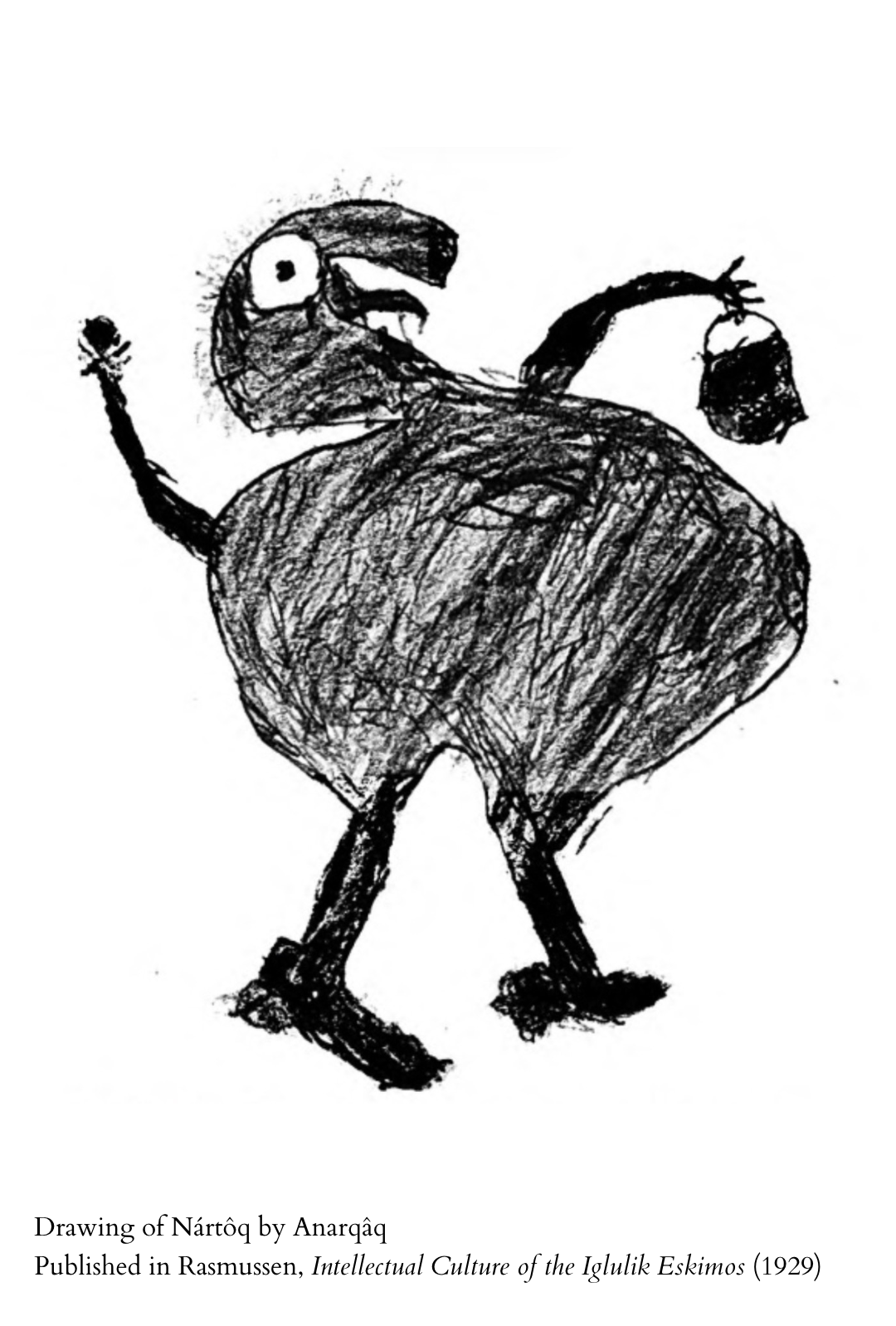
Interesting to note, too, that the spirits themselves, so central to the practice of shamanism, do not always act in comfortable or “right” ways - and it certainly does not mean that they are evil. Benedict noted that, among the “Nez Percé”, “pretense [seemingly about having guardian spirit power] aroused the enmity of the guardian animal, who avenged the insult.” Bitans have an ethical code managed by the spirits, which includes not “making evil sorcery.” The breaking of rules can result in punishment by the patron spirit. Certainly, not all spirits are evolved and helpful, ghosts being one example. But “darker” manifest content in the behavior of one’s helping spirits can actually bloom from positive intent and be incredible teachings. Perhaps a “gold-star” example of this can be found in the work of Rasmussen:
“While hunting caribou Anarqâq met this spirit which is called Nârtôq (the pregnant, or the one with the big stomach). It looked horrible; its nose was on its forehead and the lower jaw ran into its breast. It rushed threateningly at him, but disappeared when he prepared to defend himself. Later on it appeared to him again, but this time it was calm, and said that its name was Nârtôq. The cause of its hot-headedness was that Anarqâq himself was too easily angered. In future he needed never be afraid of it, if only he changed his disposition and abandoned his short temper. It became one of his best helping spirits.”
For shamans and others who engage harmful ways, it would seem that one or more forces out there in the universe similarly “avenge the insult.” “Evil shamans die young,” said former comisario Armando in Rodd’s work on the Piaroa. In “Shamans Emerging From Repression in Siberia: Lightning Rods of Fear and Hope,” Balzer shares a “strong, probably archaic belief, sometimes reinforced by whispered rumor…is that when shamans use their powers to cause harm, those ill deeds can literally come back to haunt them in the form of harm to themselves or death among their loved ones.” As for Bear Heart, in discussing how some work with “dark powers to bring about disastrous results in the life of those people they think of as 'too good’”, he states that “from all my years of training, I have a sort of built-in protection. If anyone gets really, really mad at me, as long as I don't retort with the same kind of energy, something bad happens to them. I don't do it, they do it to themselves. If I'm taking care of the medicine in a good way, that is the Great Spirit's way of taking care of His own." Or maybe, as he says, striking a similar chord to the one Balzer played, if one’s power misuse does not appear to come back on them whilst alive, “maybe in the loss of a loved one” or a great personal tragedy, they’ll still have to answer to a Higher Power someday:
“He’s going to ask, ‘I gave you certain knowledge, certain power. How well did you use it?’ You’re going to have to answer Him. You can’t lie.”
Shamans, like humans everywhere, are not monolithic. Borrowing terms from Winstanley-Chesters, I could say that we have a tendency to “thoroughly other” shamans, placing them above our heads beyond the “banal everyday world” of financial needs, personal grief, needs, and passions, and a willingness to do harm, whether “righteous” or not. Though her commentary at least pertains to those at issue, I feel Balzer’s conclusion is quite apt here: “[We] need to think beyond the simplistic dualism of ‘black’ (sorcerer) and ‘white’ (priestly) shamans, attributing general evil or benevolent intent to whole specific categories of people without sensitivity to context and change.” Recall Eliade’s words; that although “As everywhere else, the essential and strictly personal function of the South American shaman remains healing” and that such a practitioner is “the healer par excellence” among those tribes, they “can also fill the role of sorcerer; he can, for example, turn into an animal and drink the blood of his enemies.” Síre gús, although you will remember their ability to prompt bad luck and a loss of sanity, “can also help people to get rid of the evil eye or an evil spirit’s possession.” Before we burn our witches in the fires of moral opinion, we must first take care to consider the factors of culture and context that make up the brooms upon which they ride.
Questions about ethics can additionally - as I highly encourage them to - be taken to one’s own helping spirit allies for investigation. As my spirits once shared with me, “God is the best and most moral judge.” This aligns well with the words of Daniel Beaver, one of Bear Heart’s medicine teachers - “let Him take care of acts against us. To turn it over to Him, saying, ‘You know better, please take care of this for me,’ is actually the greatest warfare we can engage in.” In such ethical evaluations with one’s spiritual helpers, not only can one bolster their own moral base, but may also implicitly remind themselves that shamans, opposed to a bedazzled view of their universal saintliness, can be human, too. But even in this knowing, a question with its own ethical tones comes about: Should shamans always have their brooms grounded to the view of equality with “the rest of us?”
Nah Pede
In the beginning, I was conscious of fielding doubt from the public about my ability to facilitate psychic work because of my age; I completed my first training in oracular work at 17. New to me, however, was fielding doubt because of who I fucked.
I was teaching an angelic mediumship workshop in New York, maybe a decade ago now. In the dimly-lit room, I came to sit next to one of the few pupils in attendance. If memory serves, she expressed her joyous surprise that the practices that I was teaching worked; I “was so young, and gay!", she exclaimed, following up with a couching explanation of homosexual stigma in her culture (in Brazil or elsewhere in South America).
As if stigma about men who want to sleep with other men was unfamiliar to me in the States.
As we have seen, culture can shape one’s view of the shaman and other spirit workers, and some views, cultural or not, hold more or less water. Other views can be filtered through the thorny, binding, and somewhat blinding rose-colored glass of projection.
My definition of projection may differ somewhat from that offered by the American Psychological Association (APA), which is, “in psychoanalytic and psychodynamic theories, the process by which one attributes one’s own individual positive or negative characteristics, affects, and impulses to another person or group…the defense mechanism of projection enables a person conflicted over expressing anger to change ‘I hate them’ to ‘They hate me.’”
My (perhaps overly-broad) operational definition employed here is that projection is the psychological phenomenon of consciously or unconsciously casting upon another a trait or quality, either positive or negative, that does not accurately reflect reality. Employed this way, the term “projection” takes a literal meaning; one is taking a personal belief, need, or issue and projecting it outwards onto another, akin to a movie projector projecting images onto an outside surface. And similar to how projecting a movie onto a wall full of preexisting art would cloud the true beauty of that art, our projections can serve to obscure the truth of other persons or situations. We may, as in my account above, project a lack of spiritual efficacy on sexual minorities due to our own cultural background. This would qualify as a negative projection, as we are decreasing someone’s standing or placing them “below” an efficacy standard (in this case, in psychic work) based on our personal beliefs, needs, or issues. Several years ago, one of my spirits shared with me that hate happens when people see things that they don’t like about themselves onto others. Homophobic persons, for example, see certain qualities in the gay individual that remind them of freedoms that they never had, and they move into hate. A majority of hate, they expressed, has to do with projection.
Yet more dangerous, some would say, are positive projections - rather than being deemed less effective or “less than you,” a shaman/other psychic or their work is seen as more effective, given “god-status,” or even placed “above” you, again based on subjective factors. An example of this may be talking of a psychic or medium with stars in one’s eyes, believing that psychic (or perhaps worse, the psychic believing themselves) to be “especially gifted among men,” favored by God, capable of a divine communion or empowerment that most could only dream of. Or, recall how this essay began - with my projecting the positive notion of broad accuracy on one of my shamanic teachers based on a personal issue and need, even though this was not entirely fair to their humanness. Others with whom I speak share how they have projected on shamanic figures, too, perhaps because publishing companies cultivate the atmosphere for it - “look how wise and perfect this teacher is! You could be, too, if you buy their thousand-dollar course!” - or out of a need for someone to fill that “guru” role in their lives. And some shamans may be happy to claim it.
Positive projections like these, offered by “the public” and accepted without regulation, may see even a well-intended shaman or other medium get “big in the head” - “Yes, I am a uniquely-special and powerful psychic medium!” “I am the teacher of teachers; no one can question my authority.” “Why bother going to other healers - I can heal anything.” “I am pretty flawless and better than the average Joe to boot.” “I am God-mommy’s special little psychic flower.” As the author Charles Clark Munn penned in Rockhaven, “Compliments are like perfume, to be inhaled, not swallowed;” to be honored for the love behind them, but not drunk to a place of elevating yourself above your fellow man. My first “major” teacher suggested that, as one gives you a compliment for your psychic work, to give it to God, Who truly made that work, work. And I think - though I have been fought over the years for not accepting compliments - that this is a good practice to have.
Though potentially harmful, such projections do hold a healing potential as well. A client or student may actually benefit in some form or fashion by placing a shaman on a ground above them, or holding what could be called “limiting” ideas about shamanic work; for example, a student in a vulnerable state may need to see a teacher as a solid rock to hold onto until they get their own “sea legs,” or a client might believe that “more impressive clothing, bells, and whistles in a ceremony equals greater healing being done.” Indeed, placebo falls under our definition of positive projection; you project the idea of a healing power onto something, and that idea can in turn cultivate measurable healing. Bear Heart (recall that he was an American Baptist Minister) recounts the story of Jesus healing a blind man as a puissant example:
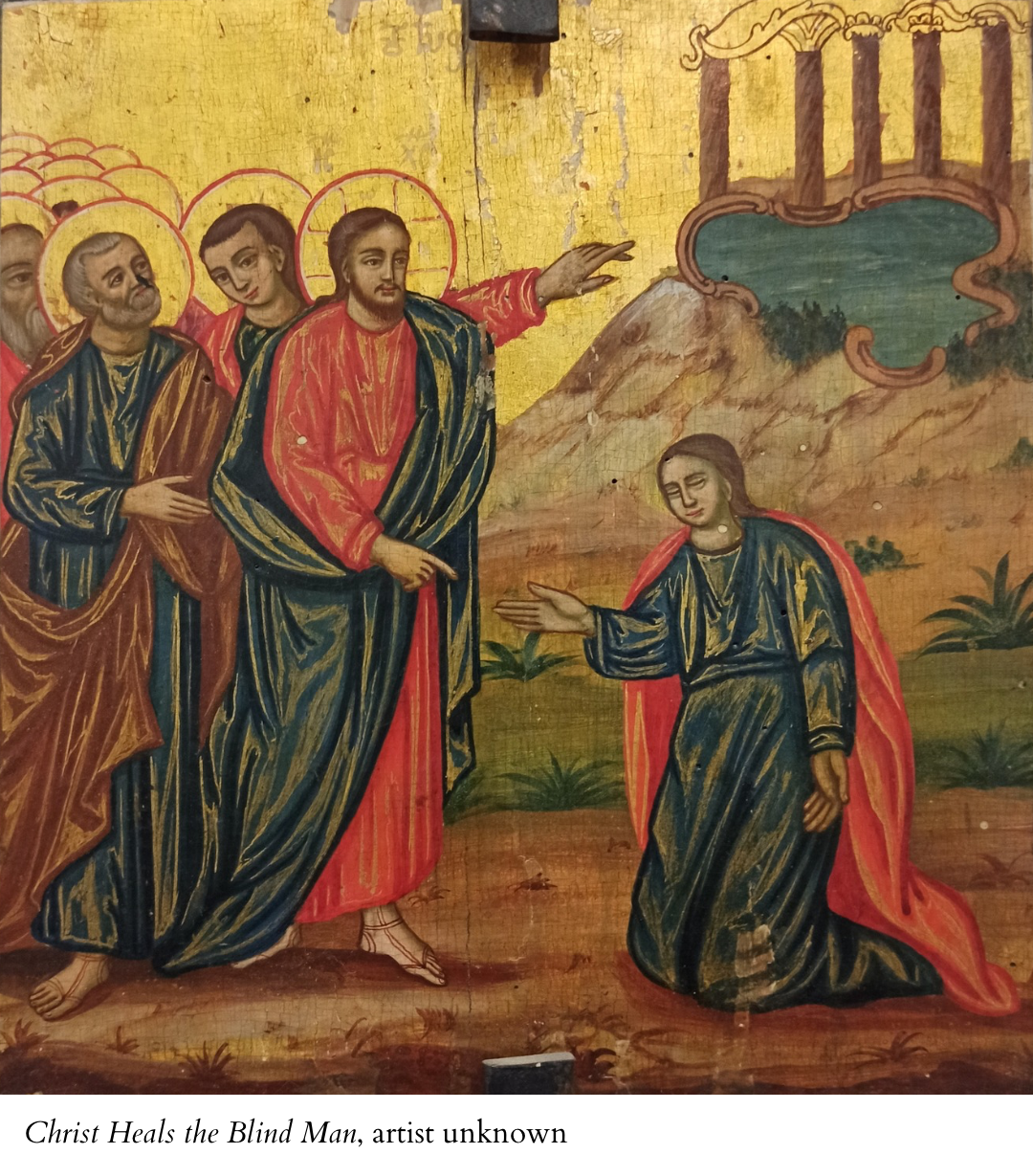
“The first thing Jesus did was spit on some dirt and put it on those eyes. Then he told the blind man to go and wash in the pool of Siloam. When he did, his eyes opened and he could see again. Where was the healing?…Jesus, being the Son of God, had divine powers. He could have commanded those eyes to see again; he didn’t have to go through all those steps, but he did. The placebo effect was taking place. Every step increased the faith of that blind man: ‘This is going to help me. This will do it.’ Eighty or even 90 percent of that healing came from within the patient. It wasn’t the dirt, or the spit, or the pool. That patient had within himself the necessary power to open the way to make healing a reality.”
Thankfully, one need not be the Son of God to ethically lean into the placebo effect. As I teach to students of shamanic healing, inclusion of “shamanic accoutrements” - dim lighting, incense or sage, sacred or “professional” dress, the use of crystals, chanting and drumming, literal bells and whistles - can potentially stimulate additional healing for persons who believe that such phenomenon means more healing is coming to them. And as we have seen, a lack of such could even lead clients or observers in an opposite direction - one reporter, unimpressed by a shaman “just sitting and singing" in their séance, went in search of a “real shaman”, and finding a shamaness whose vocals and dancing impressed her, felt she had witnessed a “genuine séance.” A similar viewpoint was held by anthropologist L.A. Karunovskaia, who once judged a séance as “not so ecstatic” due on one hand to the shaman’s movements “not excit[ing] us a single minute,” and on the other because their clothing was “not so impressive”.
While one may feel that any “unnecessary” inclusion of the “bells and whistles” is disingenuous, I argue that it is not necessarily so by virtue; as shamanic practitioners, we recognize that healing can come down multiple avenues, including from the mind itself, and capitalizing on this knowledge of the healing power of positive projections is but wielding yet another tool for restoring others to health. I recall here a word that Atkinson used: shamanship - “a term”, she said, “that invokes associations with both leadership and showmanship”.
As for teachers of shamanism or other psychic arts, “branding” can even capitalize on positive projection. Some shamanic teachers and teaching organizations in the West, as an example, maintain lists or public faculty registries of practitioners and instructors that have trained with them or operate under their “brand.” For those who trust - or positively project, even without firsthand experience of them - on such organizations and public figures, this trust can extend by association to those listed, thus “widening the circle” of available resources for healing or instruction that an individual can receive. Even something as seemingly “soulless” as a personal brand for spiritual work can have its own way of uplifting the soul.
Regardless of one’s role, instructor or practitioner, self-ego work needs to be employed - lest compliments given become internalized into a bordering-on-narcissistic worldview of “specialness,” and potentially contribute to a disconnect from your spirit helpers who do your psychic work. Chikhachev, “who visited the Altai in 1842…stressed that after conducting their spiritual performances, shamans usually returned to their regular lives and actually did not differ from other people, for they ‘did not demand any honors’ and did not consider themselves superior to other members of their communities,” says Znamenski. At least among those at issue, Balzer states that “shamans could not produce a fully effective or satisfying seance event unless they were known for spiritual depth and humbleness.” “For the Yakut,” Eliade wrote, quoting from elsewhere, “the perfect shaman ‘must be serious, possess tact, be able to convince his neighbors; above all, he must not be presumptuous, proud, ill-tempered. One must feel an inner force in him that does not offend yet is conscious of its power.’”
In writing of the Native American Church, Bear Heart shares:
“In our church meetings, we sing songs all night long. There is a word that Indians have always liked to use: pitiful. We have many songs that refer to our state of helplessness, and we wrap it up in the word pitiful. One of the Otoe songs says: ‘If there is anyone pitiful in this world, it’s me. I feel as if I’m the most pitiful of all beings and I appeal to You for help. Bless me. Give Your strength to me in such a way that I can walk in a good way upon this land. In that way I come to You. Pitiful.’ That word pitiful is sung over and over again: nad pede.”
Not everyone may feel comfortable denoting themselves as “pitiful;” for if we are “God having a human experience,” are we calling God or His creation pitiful, or placing ourselves below others, one may ask? Yet an answer may be found in the question itself: despite our inner divinity, we are still divinity having a human experience, and there are certainly aspects of that experience that can be called “pitiful.” In ego work, as in shamanism, one walks with a knowledge that there is more than one reality.
A question that I learned from one of my teachers that can be routinely brought to the compassionate spirits is, “What are the egoic issues that I need to work on at this time in order to be an authentic shamanic practitioner/teacher?” “Shamanic” can be replaced with “Reiki,” “psychic,” or whatever practice you engage. It is not to be assumed that you are already aware of such issues; perhaps it’s called your “shadow” for a reason. You can even inquire as to whether there is a method or ceremony that the spirits would recommend you employ in healing the illuminated issue.
Consider engaging the healing practice of pedestal clearing, the idea of which is that “leveling” the pedestals that we can put famous psychics, healers, and others on brings us greater grounding and personal empowerment. In a relaxed state, you might visualize or otherwise perceive your “field of pedestals;” who’s on one (or even, who are you placing yourself on a pedestal above)? Why are they there? What function does their placement serve? What impacts may it have on you? Perhaps ask your angels or other helpers to bring that pedestal back down to the ground - to the “field of oneness.” What, if anything, can you do going forward to support that greater recognition of oneness that has been cultivated here?
Finally, I will advise to this end the mindfulness of how the psychic practitioners, clients, teachers, and colleagues around you carry themselves, behave towards others, and approach their work. What “green flags” exist that you might like to cultivate in your own presence and practice - and what “red flags” would you rush to leave out, or see present within yourself that it is time to address so as not to perpetuate them further? Some of the richest lessons that our shamans and other spiritual figures can offer are not to be found in their words, but in their actions - showing us how not to work, redirecting us back towards our own spiritual authority, and reminding us that, for all the revere and revenue afforded them, they can bleed red when cut, too. Perhaps it could be said that, regardless of how powerful one appears, we are all, in the grander scheme, pitiful indeed.
──────────
One of the most famous and controversial figures in Western shamanism has been credited with what I hold as a classic scream: “Shamans are not good people!”
He was, of course, correct, but only to a degree. Some shamans may indeed not be, by any cultural metric, good people. But it is perhaps safer to say that shamans are not perfect people. And thankfully, they needn’t be to act as conduits for profound healing and change in our chaotic and misguided world - the ultimate, in my eyes, purpose of the shaman. Though they, as any other psychic workers and mediums, do not deserve “god status” on the sole basis that they work with God or other forces of the universe, they do deserve our respect, as well as our grace for their cultural backgrounds, whichever they may hail from, as well as our shared humanness. Indeed, while the history of shamanism may include what could be called the misuse of spiritual power, contemporary students (for we are all eternal students) of shamanism can potentially make different choices; to acknowledge and work with our egos and issues before they work us over, and to employ the knowledge with which we have been entrusted in a way that supports health and wholeness. Said another way, one could say that we have the choice to leave the “darker” ways out, allowing them to dissolve, and carrying the “light” ways forward into the new paradigm.
I’m on the path of recovery - which can sometimes simply mean management - for my obsessive-compulsive disorder (a nightmarish illness that stretches far in every direction beyond the stereotyped obsessions with orderliness and cleanliness). I would say that ideally, greater management means that my illness will be less manifest in my next teacher-student relationship, without feeling a need to Jackson Pollock them with colorful projection - but at this point in my walk, I feel good about having no other major instructors but the compassionate cosmic forces themselves; after all, they are the true shamanic teachers, and at least in multiple ways, free from the influence of all of the beauty and chaos that rains down on we of flesh-and-blood. As previously stated, perhaps one of the biggest lessons that we purses of flesh can offer one another on this path is: Human teachers are just that - human. It’s higher powers that deserves the truly high acclaim. Though not necessarily saints, with diligent cultivation of the self and of their work, shamans and other mediums can meaningfully aid us in the co-cultivation of a world more “saint-like” - one of greater love, greater unity-mindedness, and greater flourishing for all that call this brilliant and complicated planet home.
© Garrett Jackson, 2026