The Shamans with White Skin:
Cultural Appropriation, Confusion, & The Very Essence of Shamanism
by Garrett Jackson
I snatched up my drum bag as I turned to make my way towards the entrance.
This space - one perhaps haunted by its own challenged history teaching youth - was set to become a new (and aspirationally blessed) environ in which today’s children could experience the expressive magic of the arts.
Pushing open the door, I was greeted by the mother of the business owner who had summoned me here to perform the ceremony initiating this new beginning.
“My name is Garrett Jackson,” I said. “I’m here to perform today’s ceremony?”
Meeting my gaze, the kindly mother offered a response that has lumbered with me since: “You’re the shaman? But you don’t look Native American!”
I have now since mostly given up the altruistically-intended practice of correcting folks when they call me a “shaman.” But about the fact that I was not Native American, she was, maybe judging solely (albeit accurately) by my pasty-white pallor, correct.
Perhaps her words stick in my psyche still due to what they represent: the variety of views about who can be a shaman, what the “correct” heritage of entrée is - issues which can give rise to heated and highly-understandable consternation regarding the misappropriation of other cultures by majority groups, like those of a pallor like my own.
And Indigenous Americans aren’t the only ones saddled with the perception of sole ownership of the ancient art. A comment was once shared with me, for example, that read something like, “If you are not practicing Nepalese shamanism, you are not practicing shamanism.” A student relayed to me recently that, when she quizzed a holistic wellness practitioner as to whether or not they identified as a shaman, the practitioner guffawed, “I’m not a shaman! I’m not from Peru!”
Shamanism is a practice and a way of life that has found a home in the heart of many a Westerner over the decades. Given the utility of understanding the occasionally-viscid ties between cultural appropriation and shamanic practice in the West, the student or even curious onlooker of Western-taught shamanisms would do well to grapple with the question at the heart of this piece: “Can white Europeans and Euro-descended North Americans practice the ways of the shaman - and if so, why?” This question is somewhat narrow, but intentionally phrased in a manner that speaks more to what I would expect a student or concerned observer to ask me. The exploration of such a question can not only serve to bolster one’s knowledge of and ethical engagement with this brand of sacred work, but also call into question - and rightfully so - our very understanding of the essence of “shamanism” itself.
Defining the Sacred
Shamanism, anthropologists have said, is the world’s oldest profession - much to the chagrin of prostitution.
Once believed to be a subject for the “dustbin” of anthropology, Jane Atkinson noted that the 1980s saw “a resurgence - some call it a renaissance - in scholarship on shamanism.”
“By far the most significant recent development for the field,” she wrote in her 1992 Annual Review of Anthropology piece, “is the blossoming of a new shamanism in the United States and Europe, spawned by the drug culture of the 1960s and 1970s, the human potential movement, environmentalism, interests in non-Western religions, and by popular anthropology”. Indeed, smack in 1980, the late and controversial anthropologist Michael Harner published what’s been deemed a classic, The Way of the Shaman, and his Foundation for Shamanic Studies, founded a few years later, is still around today. The work of Harner and many other shamanic figures, such as Carlos Castaneda, Alberto Villoldo, Robert Moss, and beyond captivated minds before, during, and after the 80s, and today finds itself embodied in books on library shelves, widely-attended courses and online talks, and so forth. Citing census data, a 2023 piece claimed that shamanism is the fastest-growing “religion” in parts of Europe. Perhaps this echoes what Wallis and Partridge saw in 2003 and 2004, respectively - that shamanism is among the most rapidly expanding practices in the Western world.
With a diversity of views and understandings about shamanism, and our contemporary and necessary eye on matters of social justice, it is perhaps inevitable that some confusion - as well as controversy - would bubble around this art. To “turn down the heat” in certain regards, it is beneficial for one to grasp what exactly shamanism is.
And that can be tricky.
Before I continue, I wish to offer a brief but important caveat: having taken only several college-level anthropology courses and holding a bachelor’s degree in psychology, I am nowhere near an anthropologist or ethnographer. I am merely an avid student of shamanism, at present from an academic perspective. While one may wonder about my financial incentive to “safeguard my right” to practice shamanism, as is currently my livelihood, it should be noted that my work does not generate an income anywhere near what a comfortable person would deem worthy of “safeguarding.” Finally, I have chosen to center scholarly opinion and “physical-world findings” over any information gleaned from my own direct revelation, so as to offer a more appropriate discourse regarding the open wound of cultural thievery of the sacred. These points made, what I display below can be viewed in its appropriate contextual light.
To define what precisely shamanism is - and thus have a clear, structured phenomenon of which to debate - does not seem as easy as one may assume or portray.
“Shamanism” has been found the world over. Persons have written about shamanisms in North and South America, northern Europe, Korea and other parts of Asia - all over. Even with this global presence, New York University Department of Anthropology’s Bruce Grant writes:
“Despite the morphings of shamanism across time and space, there is general agreement on the ground rules: To be a shaman, as opposed to an oracle, sorcerer, diviner, clairvoyant, geomancer, witch, or warlock, you should be able to engage in two-way communication or, for that matter, simply merge with spirits at will. After that, the devil is in the details. There may or may not be trance; there may or may not be spirit travel; one may or may not serve as a guide or psychopomp to spirits who have lost their way. Shamans sometimes heal…After that, things get a bit murky.”
Such ambiguity may come as a bit of a surprise to some contemporary practitioners of shamanism, who may define shamanism, as an example, by “magical flight,” the shaman’s journey into other worlds. Yet, Findeisen (Schamanentum dargestellt am Beispiel der Besessenheitspriester nordeurasiatischer Völker, 1959) and Shirokogoroff (1935) in his work among the Tungus focused their definitions on the voluntary possession, or the merging with spirits, that shamans undertook. Indeed, some who are called shamans may not even do this - Kendall wrote that Korean shamans were more likely to report the spirits communicating with them intuitively rather than through possession. Thus it would feel irresponsible for me at this point to define shamanism solely by a soul journey. And such hesitation may be able to be extended to other seemingly-key aspects of shamanic practice, as Grant illustrated above.
Pharo noted in a 2011 work that “Scholars from various academic disciplines make use of different, indistinct, and indeed contradictory definitions of these terms [“shaman” and “shamanism”]. As a result, their content and meaning have been obscured.” Perhaps one could even go so far as to apply Rydving’s words here: “Definitions of shamanism are legio and historians of religions sometimes have a tendency to talk as if ‘shamanism’ were something concrete, thereby forgetting that it only exists as an abstraction and a concept in the brains of its students.”
Given this, I cannot present shamanism as something universally and too-narrowly defined, nor do I wish to present an operational definition that would be so, and thus exclude the valuable works of true anthropologists or ethnographers that write of shamans in ways outside of said definition. In other words, I am not in the business of saying who is and is not a shaman.
On the other hand, we cannot take any and all “technicians of the sacred,” to use a term from Rothenberg, as shamans. Safer, therefore, to offer some seemingly-core elements in what has been deemed “shamanic practice” by researchers. To me, some such cross-cultural elements appear to include interactions with spirits, “trance” or altered states of consciousness, divination, certain forms of healing such as psychopomp and soul retrieval, and the “magical flight” or shamanic journey.
This is not a flawless approach. I know of mediums that do divination and healing work, in a relaxed state, calling upon angelic beings (what a shamanic practitioner may call a form of “helping spirit”), for instance. Should we call them “shamans?” And on our question of appropriate ethnic entrée, how can we argue fully who does or does not possess the “right to shamanism” if we do not share a mutual definition or idea of what it is that we are arguing about?
For these purposes, as well as for the studies of comparative religion and beyond, constructing an at-least-increasingly universal definition of “shaman” and “shamanism” is something that I call loudly for. For now, however, much as practitioners of shamanism would do well to cultivate comfort in cosmic mysteries, we all may need to be comfortable with a certain level of intellectual mystery on this front, for now.
Shamanism’s Soul Proprietors
Apart from the matter of my age (I began seeing divination clients and teaching in my teens), my race has been another genesis of questions regarding my “line of work,” as the above anecdote alluded to. Here is another.
In the summer, I shared a downtown lunch with a business owner whose venue I saw as a potentially-worthwhile place in which to teach shamanism. In our discussions, it became clear that we both shared a progressive orientation towards social justice. I had a sense that the issue of cultural appropriation could arise, and bringing this up, the owner did express quandaries, relaying an experience of an extracultural shamanic ceremony that they hosted or had knowledge of whose facilitator did not (by either of our estimations) have a satisfactory answer when asked about their ethnic right to bring such a ceremony to the area.
The other issue was something in the strokes of what would grant a white person like myself positioning to teach shamanism over a person of another ethnic identity, perhaps with their own cultural shamanic heritage - in other words, why me over another?
I did my best to answer their quality questions with quality answers, and our meeting ended with an understanding that they would reach back out to interview me for their space, perhaps indicating that further discussion on matters of cultural appropriation would be useful or necessary. Whether due to these issues of perceived social injustice, or simply the many machinations of life, I did not hear from them again.
The question of “correct ethnic entrée” to shamanism is an important one, and perhaps the largest source of confusion and anger regarding white European or Euro-descended Westerners engaging in it. This can arise from differing beliefs about what culture shamanism “belongs” to - maybe put in other words, “Who owns shamanism?”
For quite some time, that ownership has been, perhaps questionably, thrust upon Siberia.
Firstly, our word “shaman” comes from the Tungus (Evenki) term “saman”, which has been said to mean “to know in an ecstatic manner” (the Tungus are a group indigenous in Siberia). Fonneland and Äikäs report that the Tungus “samán” entered into Russian, then German, and from there into other European languages.
On top of this, Grant notes that Eliade, in his cornerstone tome Shamanism: Archaic Techniques of Ecstasy, took the position that shamanism “once took spark in a cold Russian north in illo tempore [at another time]”. Grant further points to German reports that painted a portrait of “Siberian ‘ownership’ [of] the shamanic tradition”, and whose repetition has ensured that this belief remained “largely in place.” Doniger, in the foreword to the 2004 edition of Eliade’s Shamanism, notes that “Some would restrict shamanism to Siberia, where it was first and most dramatically documented, and where indeed it includes certain regional characteristics (such as the use of reindeer) that are not exactly replicated anywhere else.”
Siberia aside, Peru, Nepal, Indigenous America, and likely beyond have also each been gifted (or burdened) with “the claim” to shamanism. Perhaps because of where I live, the question of Native American appropriation feels particularly salient.
In “Plastic Shamans and Astroturf Sun Dances: New Age Commercialization of Native American Spirituality,” Lisa Aldred notes what appear to both myself and the critics whose voices are included to be questionable representations on Native spiritualities.
Yet Aldred also includes in this breath an admonishment of “core shamanism,” which was described, in quoting directly from the advertisement at issue of Michael Harner’s workshop at Omega, as “the universal and basic methods used by the shaman to enter non-ordinary reality for problem-solving, well-being and healing.” While I do not intend to put words in her mouth, the implication that one could read here is that such a form of shamanism - or perhaps, shamanism overall - is appropriative of Native American spiritualities.
I treat core shamanism as its own tradition - a subject to which we shall return. However, given the scholarly outputs that illuminate shamanism as a global phenomenon, with cross-cultural (if not always universal) characteristics, it is impractical to say that any one people “own” shamanism. An origin is likewise meaningless in practice now; the “cat is out of the bag” - shamanism is found the world over. And both arguments of ownership and origin would seem to rest on there being an agreed-upon definition of “shamanism” in the first place.
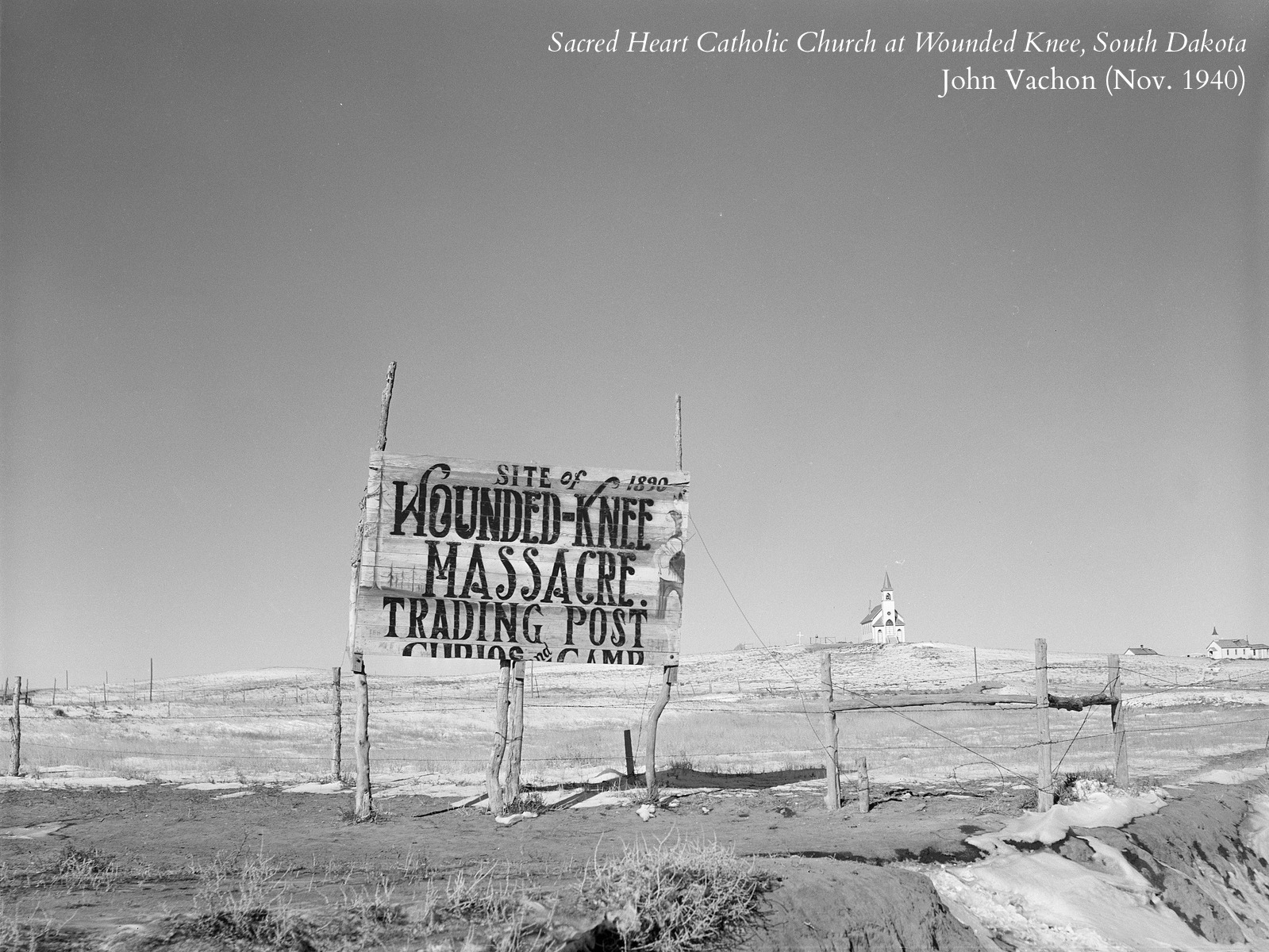
Cultural appropriation is a major ethical concern in modern shamanic practice. Certainly, persons appearing or identifying as white (“white” being a “socially-defined racial group,” per the American Association of Biological Anthropologists; a very real social reality rather than a biological one) may indeed have a clear shamanic heritage from which to ethically draw, thus illuminating another nuance in our question about white Europeans and Euro-descended North Americans “doing” shamanism. Unauthorized use of religious or sacred symbols, techniques, mythologies, and ceremonies, however, from other peoples - especially when said peoples have been historically and are presently oppressed by the appropriator - is not only far from appropriate, but the active rubbing of jagged salt in an open wound that still festers with the memories of the unthinkably nightmarish Native American boarding schools, history’s widespread outlawing of Native religious ways (including the Sun Dance) by the United States government or its banning of the Ghost Dance (an accusation of participation in which was followed by the massacre of over 300 Lakota individuals, including children, at Wounded Knee Creek), and far, far beyond. Culture-specific shamanic imagery and ceremonies ought to be left there - in that culture - unless appropriate authorization dictates otherwise. To persecute a peoples, and then turn and steal their tender sacred ways, is in ineffable insult.
I argue that shamans are shamans not by culture, but by currently-subjective definition. And recognizing the ethical ravine of appropriating culture-specific shamanisms, what of the use of cross-cultural commonalities among Western practitioners - does this raise issues of its own, if not for cultural appropriation, for the quality or authenticity of the shamanism in question?
Rotten to the Core?
The phenomenon of core shamanism, as illustrated in the example above, is something that some may criticize as perhaps being “stolen” from another specific people or group of peoples, or a form of “neo-shamanism” - a term that I find has a somewhat pejorative twist.
Core shamanism, according to his Foundation, is said to have been originated and developed by the aforementioned Harner. Similarly to how it was described in the Omega advertisement, today the Foundation classifies core shamanism as consisting “of the universal, near-universal, and common features of shamanism, together with journeys to other worlds, a distinguishing feature of shamanism.” Other figures and teachers have also termed their work, either in part or in whole, core shamanism.
Such an idea has great merit in the Western world. I have never taken a program with the Foundation, nor should their inclusion in this piece be interpreted as either rejection or endorsement of their work, or the work of any others termed “core shamanism.” It is worthwhile to illuminate, however, that allowing white European or Euro-descended North Americans access to shamanic practices for aiding oneself and others that are cross-cultural, not bound to any specific culture, does give one a much more appropriate way of entering into the work.
But I do not call my work “core shamanism” - and I would not recommend my students do so, either. This is firstly due to the fact that I use “core shamanism” solely in the context of the specific work taught by Harner’s Foundation, and secondly to that which Annette Høst has pointed out:
“But we fool ourselves if we are not aware that as soon as we have stripped the shamanic practice of Lakota, or Nepalese or Yakut clothing, we don our own. We clothe it inevitably in our own cultural form, outlooks, habits, and biases. Even if we could learn just the core, as soon as we practise it, it grows roots in and is flavoured by our own culture, time, and spiritual outlook- as it should. And then it is not core anymore.”
Those affiliated with core shamanism may have long come to Høst’s conclusion and understandably see this as an issue of semantics. But again, unless we are practicing the specific work taught by Harner’s Foundation, and to perhaps more explicitly illuminate the nature of the work that I share, I advocate for a linguistic shift away from the use of the term “core shamanism.” Agreeing with Høst, I prefer to simply call my work “shamanism.” But if I must be more specific, I will call my work “Western shamanism.” And this is indeed the case, as although spirit communication, divination, and other techniques at the bones of my work can be found transcending cultural borders, the specific ways in which I teach them are tailored for Western students, and my practice tailored for Western clients. Thus, in Høst’s words, “it is not core anymore.” And as I teach shamanism as a form of direct revelation, it should not be understood as the singular Western shamanism, either - just my form informed by my studies and experiences with the spirits. It is work not of an outside specific culture, but the one in which I live.
Before my reasoning for this discourse is made fully clear, “neo-shamanism” is yet another term that merits a quick glance, for core shamanism itself could be called a neo-shamanism, and even some like von Stuckrad may call my label of “Western” shamanism an alternative one for neo-shamanism. In his informative piece “Trends in Contemporary Research on Shamanism”, DuBois writes that this “term implies a distinction between traditional shamanisms that have been passed down from generation to generation within specific cultural traditions…and more improvised, provisional shamanic rituals and experiences often born within workshop settings and informed by past (or recent) ethnographic literature.” He also notes the existence of “ethno-neoshamanisms…focus[ed] on recovering past shamanism on the basis of specific historical evidence.” Here, he cites, for example, Sami shamanism and Ailo Gaup (Sjamansonen, 2005), as well as Tom Cowan (Fire in the Head, 1993) and Celtic shamanism.
Neo-shamanism is not necessarily only a Western phenomenon - Atkinson mentions in her above-cited review a “Korean form of neo-shamanism” in writing about intellectual’s use of shamanism in demonstration and protest - and the undertone to the phrase can imply that this shamanism is “less-than,” inauthentic, or “other.” But I argue that what makes a shamanism shamanism - what lies at its heart - is not when, where, or how it originated, but the intervention of the spirits or the Divine with whom the shaman/ic practitioner works. As Jonathan Horwitz wrote, “No spirits, no shaman.” At least as I teach it, shamanism is really about Spirit - learning how to work with it ethically and effectively, and perhaps most importantly, learning to move oneself out of the way so that that transpersonal power that knows how to heal can move through you. And you serve, more or less, as a well-prepared human connection for the client.
The ultimate point in this that ties into our question - can white Europeans and Euro-descended North Americans really practice shamanism? - is this: Whether one calls work sourced from acultural themes Western shamanism, core shamanism, or neo-shamanism, the term matters less than the spirit of the shamanism at hand, and the bedrock of engaging culture-transcending themes feels far more appropriate than lifting the shamanism of another perhaps-marginalized people and dropping it into privileged positions of power like mine. This form of shamanism that myself and a number of my contemporaries teach is sculpted to our culture(s) and their particular needs - as perhaps any form of treatment should be. And whether a shamanism is “wholly traditional” or not seems, on one level, to matter little in the face of what I see as one of the, if not the single, most important questions we could ask of a spiritual practice - does it help and heal the people? Does it get results?
Conclusion
In using non-culture-bound, recurring themes of what has been deemed “shamanism” in scholarship, anyone - including white Europeans and Euro-descended North Americans - can utilize such techniques or themes in a more ethical manner, working to avoid the salient tumor of cultural appropriation while supporting their communities in matters of guidance and healing with the compassionate spirits as their partners. Willis, in his piece “New Shamanism,” states that findings from what he calls “neo-shamanic groups” are in favor of…

“…the theory that the ability to enter shamanic trance is genetically transmitted and had survival value for the species in the Paleolithic era as a means of acquiring knowledge inaccessible to ordinary consciousness. It may also be that current social conditions in the industrial countries where neo-shamanism is a growing phenomenon are specifically favourable for the reactivation of a ‘natural’ capacity long repressed by the dominant scientific culture and, before that, by the Christian church.”
I am certainly pro-science and pro-heart-centered Christianity - what my friend and Catholic priest-shamanic teacher hybrid Karen Furr would call a Christ-Path. I consider the profound impact that holding Matthew 25:40 close could offer to our moment: “And the king will answer them, ‘Truly I tell you, just as you did it to one of the least of these who are members of my family, you did it to me.’”
Yet it cannot be ignored that, indeed, some of the social conditions of the modern West beg loudly for some additional or increased element of shift. In a world tormented by climate change, rampant division, mis- and dis-information, and seemingly-bottomless greed, among the more “everyday” issues of unaffordability, chronic health challenges, and confusion regarding the direction or purpose of one’s life, shamanism can join modern science and Christian love - and many other worthwhile interventions - in aiding what ails. Through shamanic means, one can access knowledge about their next steps in a given situation, heal unfinished business with the departed, offer spiritual healing for physical and emotional illness, gain a higher perspective on the struggles of the globe and how they can be of service, the nature of the “Other Side” beyond the stories of others - this is just some of what the “world’s oldest profession” has to offer to the contemporary world.
Some may argue that shamanism is a path that one is called to, or destined for, not one that one chooses - and thus, modern seekers simply “interested” in learning some shamanic techniques are violating that standard. Citing a portion of the literature, it would be reasonable enough to state that shamans are at least often the elected, not the self-volunteered. From a practical standpoint, however, if one engages in shamanic practices, and the compassionate spirits who occupy the central role in shamanism engage back, I see little reason to block persons who were not called or destined in obvious ways from helping and healing others through “shamanic” means. Shamanism places authority in the Spirit/s, not the sapien. And what could be the biggest theme in shamanism - interaction with spirits - belongs to nobody. Everybody has the right to direct revelation. And if you work in ways advised by your spirit ally or allies in treating and working with others, you are working in the spirit of shamanism, whether your practice as a gestalt is “shamanism” or not.
In evolving our personal and collective consciousnesses, responsibly wielding cross-cultural or culturally-authorized shamanisms is a tremendous and ineffable gift. Today’s students need not add further layers of oppression onto other peoples through cultural appropriation, or diminish their work for not being Siberian, Native North American, or Peruvian, nor perhaps, with the scholarship offered above, engage in excessive infighting or potentially harmful generalizations about what shamanism “is” and “is not.” Much as in everyday life, there are valuable and varied viewpoints, and a good goal to strive for is greater shared understanding while accepting the rich grey areas of the gift of life and the spiritual practices contained within it.
In answering the question, Do white Europeans and Euro-descended North Americans have the right to practice shamanism?, it would seem, given the inputs, that the conditional but present (and perhaps much-needed) answer is “Yes.”
© Garrett Jackson, 2026
Image Credits: Garrett Jackson, except where otherwise noted